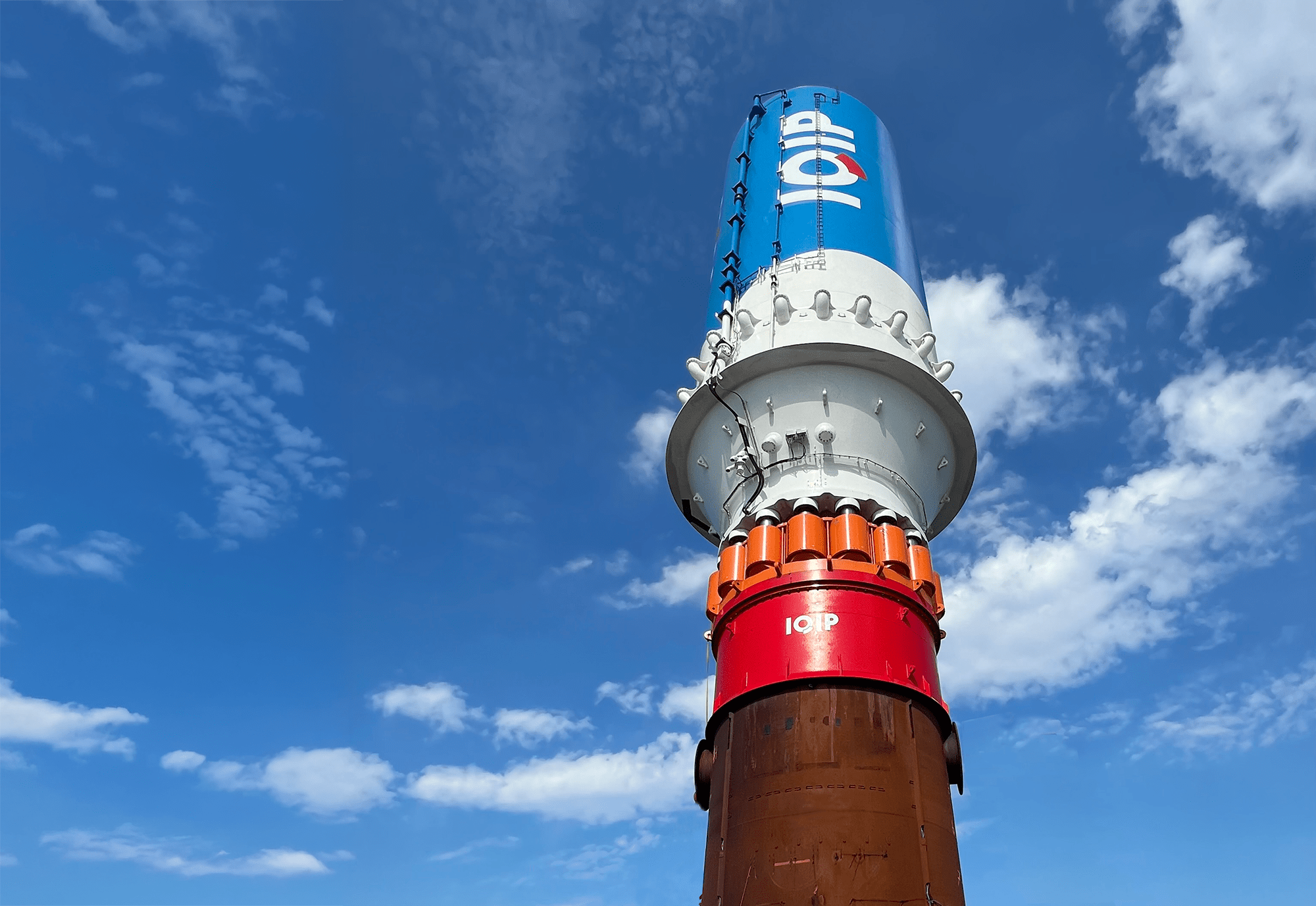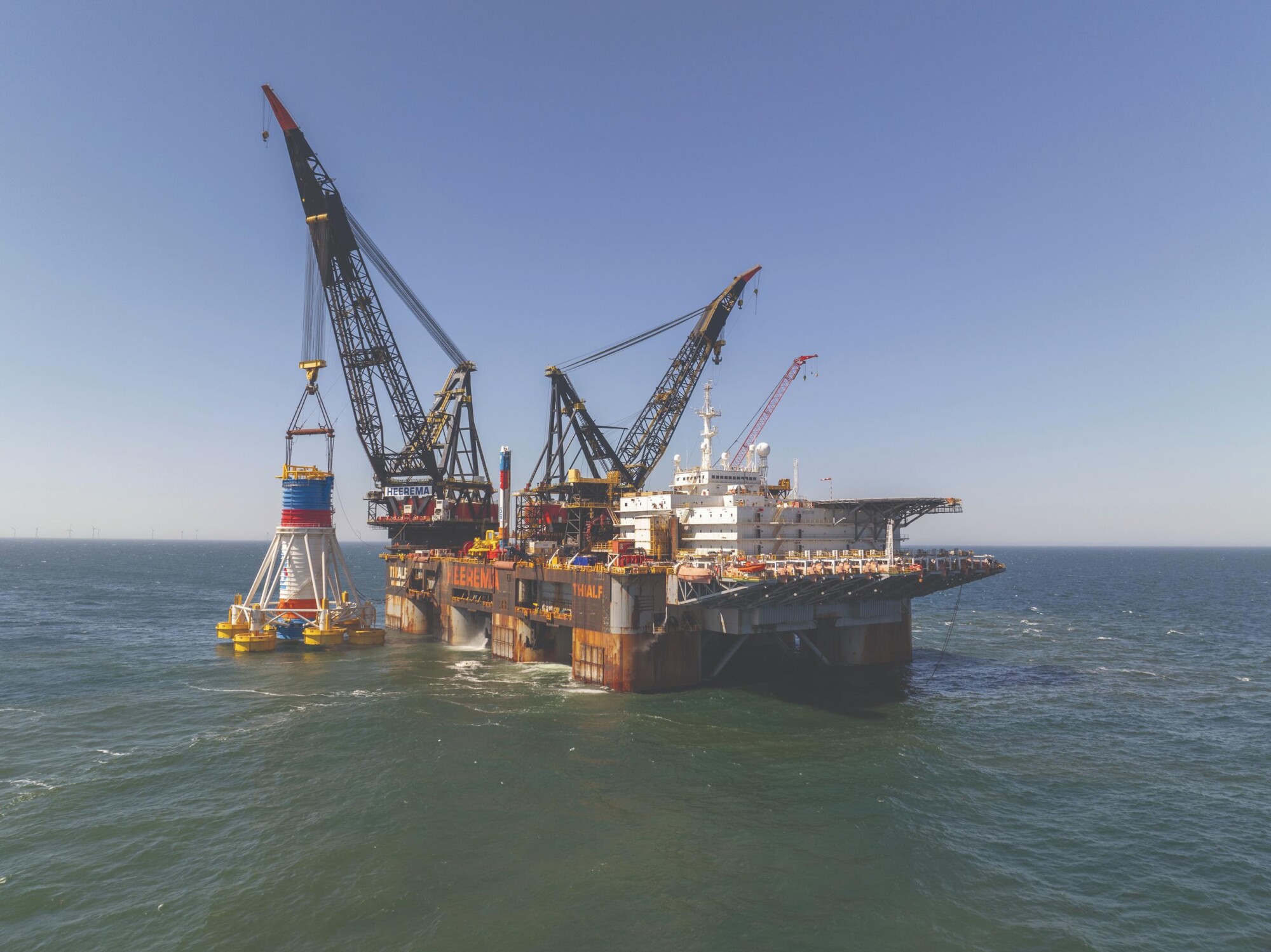
After the inshore demonstration at Maasvlakte 2, the EQ-Piling system returned to our yard in Sliedrecht — where work on adjustments and improvements resumed almost immediately, preparing it for the next phase towards the commercialisation of EQ-Piling as a low-noise, low-CO2 installation method.
Building on the insights gained during the demonstration of the system’s core working principles, and following detailed evaluation of its components, several targeted improvements were implemented. These improvements marked the start of the preparation phase for the full-scale monopile installation at Dreekant.
At our yard in Sliedrecht, the system was carefully reassembled and prepared. The water tank was fully equipped and readied for offshore deployment. In parallel, the base construction was assembled, including the reinstallation of the buffers.
With preparations complete, the next step was transport to Rotterdam, where the water tank and base construction were assembled into a fully functional EQ-Piling system. Using RoRo operations, both components were rolled onto a pontoon.
From there, the EQ-Piling system set sail, embarking on a highly visible transit from Sliedrecht to the Port of Rotterdam — a journey that signalled the transition from preparation to offshore execution.