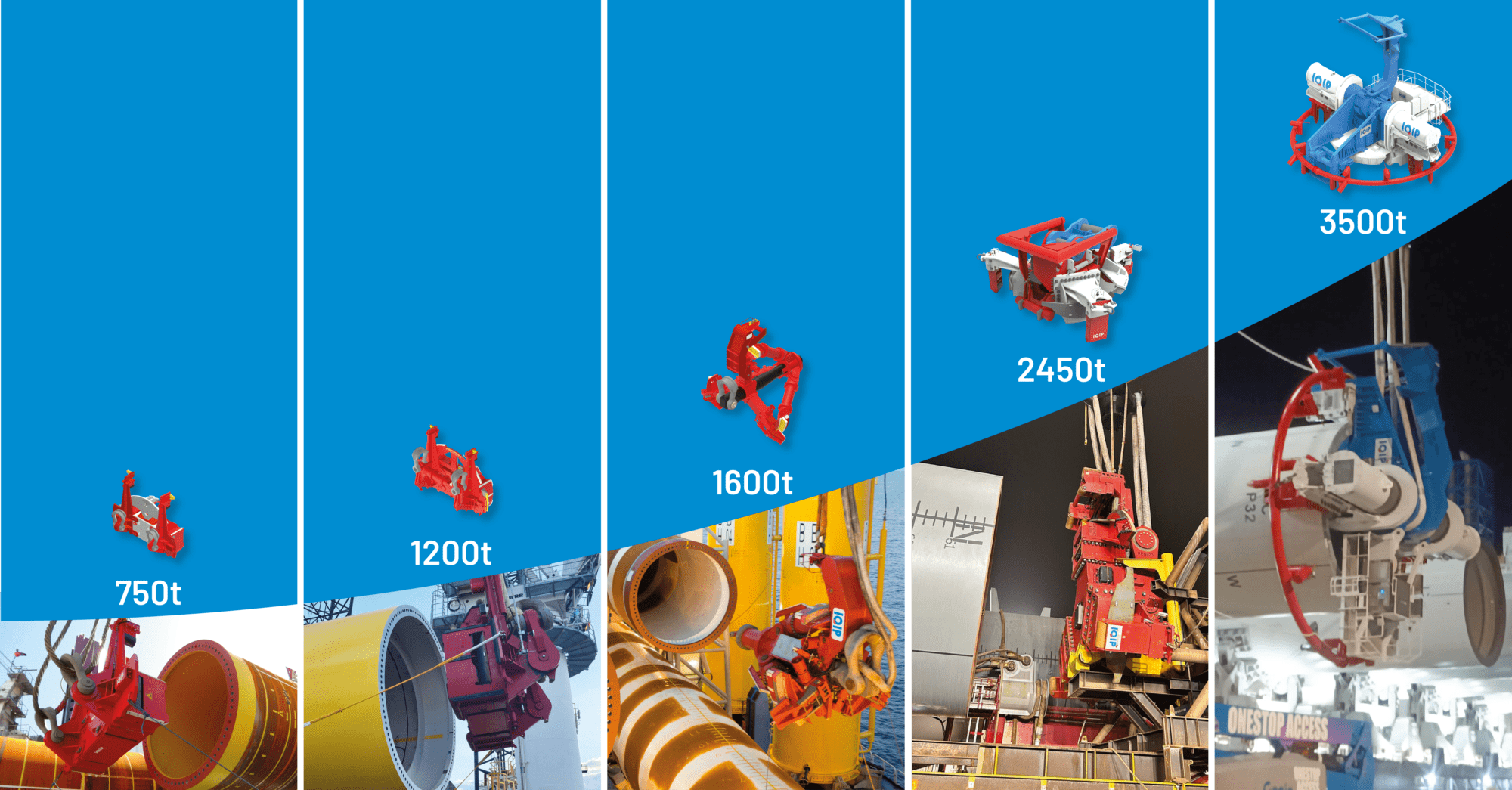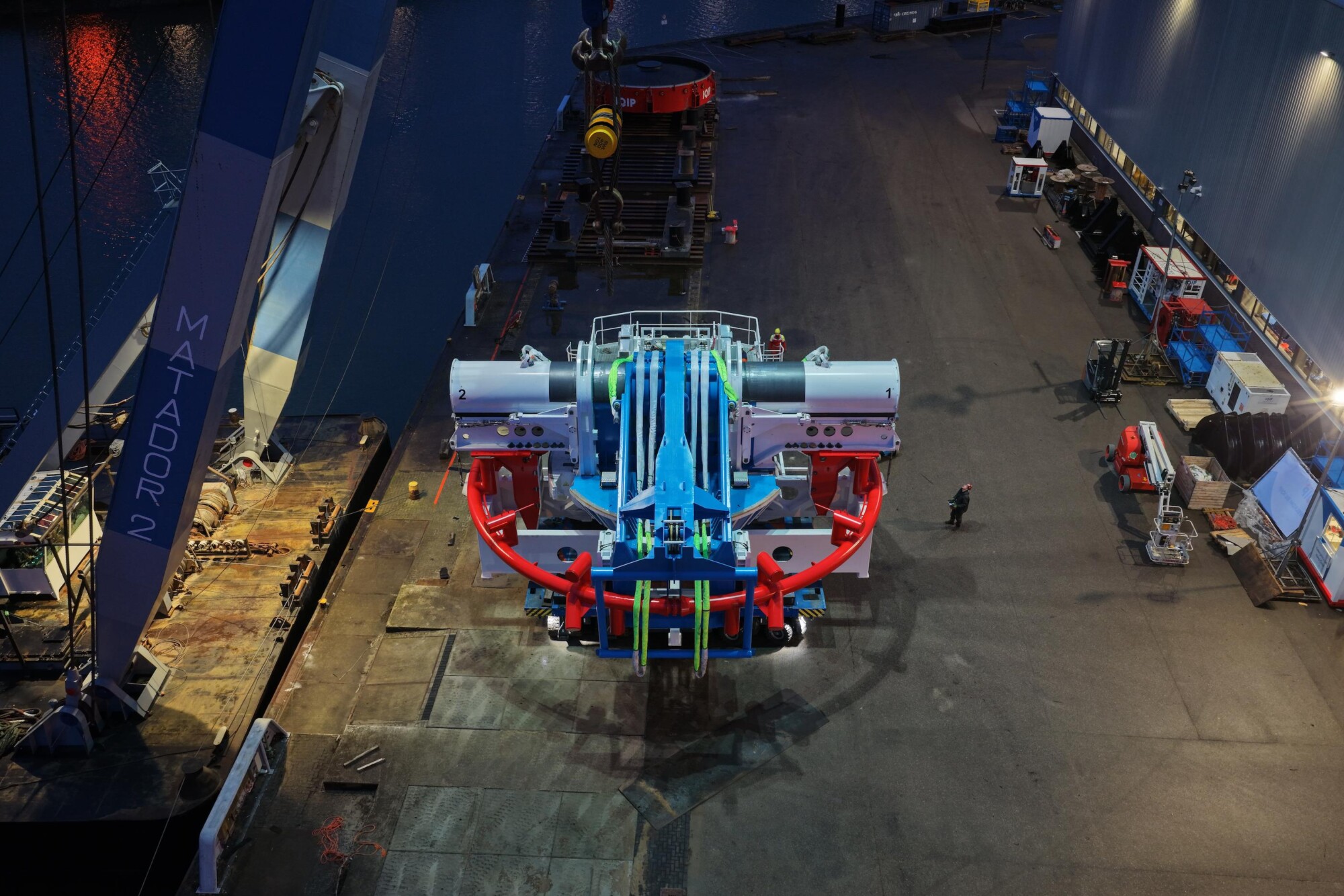
Monopile foundations are the dominant foundation type used in offshore wind turbines. The bolted L-flange connection, where the flange forms an L-shape with the pile wall, has become the most used method for joining monopiles and transition pieces (TP), or in TP-less configurations for the monopiles with the turbine tower. Its mechanical reliability and suitability for the current large-diameter piles make it the preferred choice in modern offshore wind farm construction.
Because monopiles are transported horizontally on the deck of installation vessels, they must be upended before installation. This is where the Flanged Pile Upending Tool (FPUT) comes into play. Specifically engineered for this task, the FPUT engages with the flange geometry, which differs from a perfectly cylindrical pile, and locks into the top of the monopile remotely controlled. The crane then lifts the pile into a vertical position. Once upright, the tool disengages via remote control and is returned to the deck, ensuring a safe, efficient, and “no hands on deck” operation.
Over the years, IQIP has continuously refined its upending technology, not only by increasing lifting capacity to accommodate larger monopiles, but also through intrinsic design improvements. These include:
- Enhanced remote control systems that support improved stabbing accuracy, aided by integrated guides, cameras, and sensors.
- Design enhancements that enable free-hanging stabbing when working from floating installation vessels.
- Enhanced safety features built on IQIP’s signature fail-safe principle, ensuring tool integrity under load.
- Better adaptability to varying pile geometries, including adjustability to top diameters up to 9.5 m.